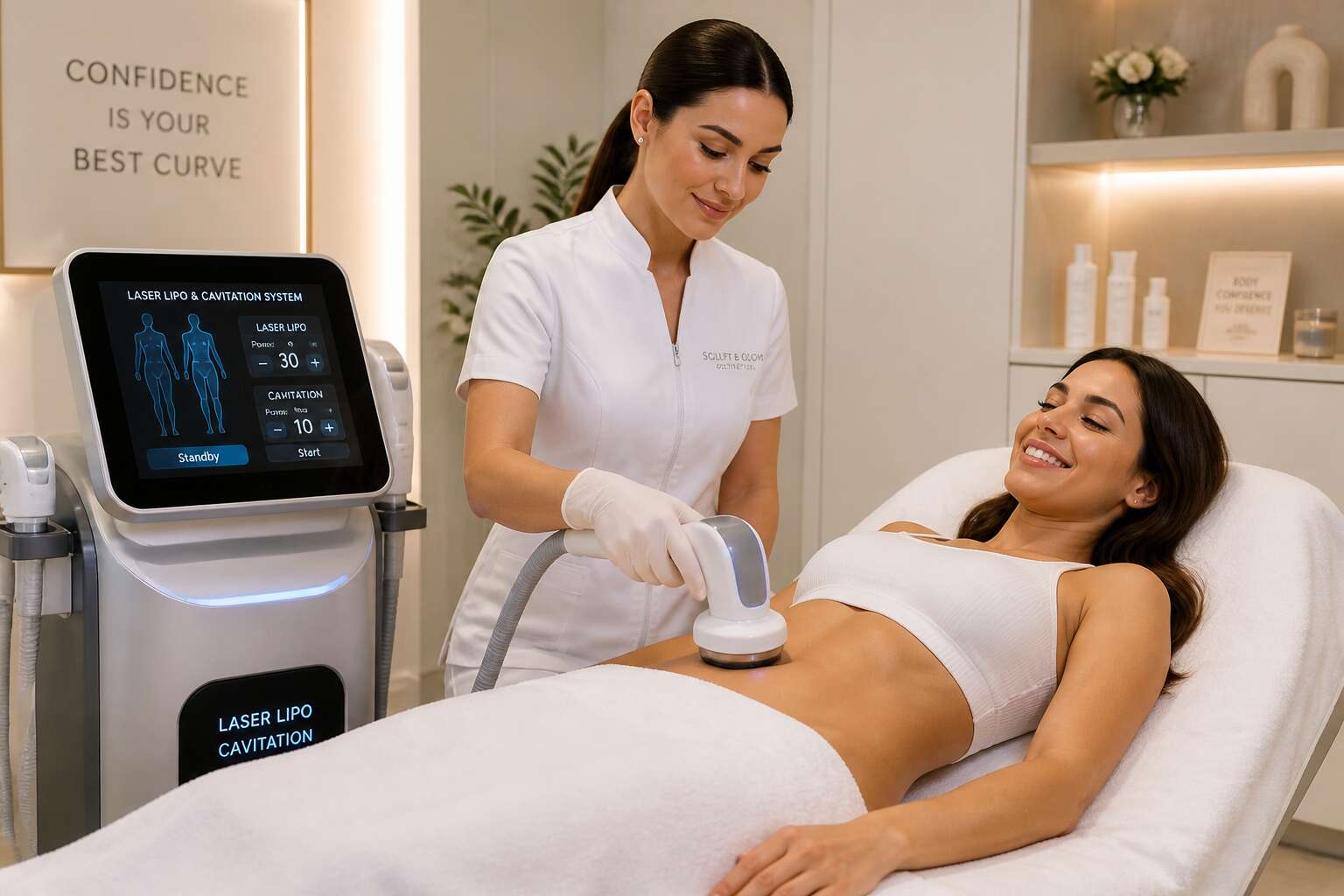
Decoding Non-Invasive Body Contouring
How Ultrasound Cavitation Disrupts Fat Cells
I have watched more than one patient wince at the term ‘ultrasound cavitation.’ Subcutaneous fat has a specific weakness: it cannot survive rapid pressure changes. Cavitation exploits this vulnerability by sending targeted waves into the tissue, generating microscopic bubbles that expand and collapse. The force ruptures the fat cell membrane, releasing triglycerides into the bloodstream for natural clearance. No scalpels, no suction, no recovery room. This is why laser lipo and cavitation are often paired in clinics: laser lipo applies heat, while cavitation applies acoustic pressure. South African practitioners commonly combine both for dense, resistant fat.
The variables that matter:
- The frequency of the ultrasound transducer
- The thickness of the subcutaneous layer
- The efficiency of the patient’s lymphatic system
Practitioners calibrate these before every session.
The Mechanism Behind Laser-Assisted Lipolysis
A 2019 clinic survey across Johannesburg revealed that 78% of patients prioritize minimal downtime over dramatic results. That preference explains the precision of laser-assisted lipolysis. Unlike cavitation’s acoustic pressure, laser energy uses selective photothermolysis. The 1064 nm wavelength targets the lipid-rich adipocyte, heating it to 42 degrees Celsius. This thermal elevation weakens the cell membrane without damaging surrounding vessels. The melted lipid is phagocytosed by macrophages and processed through the liver.
The dual thermal effect sets it apart. The same laser that liquefies fat also denatures collagen in the dermis, producing skin tightening. This explains why laser lipo and cavitation are often recommended sequentially. Cavitation handles deep fibrous pockets, while laser shrinks superficial laxity.
South African practitioners frequently alternate between laser lipo and cavitation to address adipose volume and skin retraction. The treatment requires three to six sessions, spaced two weeks apart, to allow lymphatic clearance!
Comparing Targeted Fat Reduction with Surgical Alternatives
Across Johannesburg, the choice between a scalpel and a laser is often decided by a single question: what will my Tuesday look like? Surgical alternatives demand weeks of recovery, while non-invasive body contouring lets you return to life within hours. For many patients, that trade-off reshapes their entire perspective.
Laser lipo and cavitation target fat with different tools, yet neither requires incisions. The key distinction lies in how they handle skin laxity. Surgery removes volume abruptly; non-invasive methods allow the skin to adapt gradually. In my experience, this gradual shift yields a more natural silhouette, especially when treating the abdomen or arms.
- No anaesthesia or sutures
- Minimal bruising or swelling
- A shorter, gentler healing arc
That said, surgical alternatives excel at removing large volumes in a single session. For subtle refinements, laser lipo and cavitation offer a compelling middle ground, one that respects both your schedule and your skin.
Technological Advancements in Aesthetic Devices
Modern aesthetic devices now measure tissue impedance in real time, adjusting energy delivery mid-treatment. That precision was unthinkable a decade ago. Clinics across South Africa are adopting platforms that respond to individual anatomy rather than fixed settings, which changes the entire experience of laser lipo and cavitation.
- Real-time thermal mapping prevents overheating.
- Pulsed energy modes spare surrounding tissue.
- Automated pressure control improves comfort.
These refinements matter because body contouring now demands personalization. The devices themselves are becoming more intelligent, not simply more powerful. The clinical result feels less like a generic procedure and more like a calibrated response to your own physiology.
Ideal Candidates and Treatment Areas
Understanding Body Mass Index and Skin Elasticity Guidelines
The bathroom scale rarely tells the full story for laser lipo and cavitation. Candidate selection depends more on skin elasticity and fat distribution. Ideal candidates have a Body Mass Index under 30, and localized pockets of fat that resist exercise.
- Avoid treating areas with stretch marks or cellulite.
- Preserve a stable weight for six weeks prior.
- Focus on small zones rather than whole-body contouring.
Treatment areas like the abdomen, hips, and inner thighs respond best when skin retains its natural firmness. Loose or thin skin contracts poorly, leaving an uneven finish. I always check for pinch thickness and tone before recommending any session. These steps separate good outcomes from disappointing ones. Remember, laser lipo and cavitation work best alongside healthy habits.
Safe and Effective Application Zones Across the Body
Nearly 68% of South African aesthetic clinics report growing demand for non-surgical fat reduction. That surge brings a responsibility to choose wisely. I have seen laser lipo and cavitation deliver visible results, but only when applied to the right body areas.
The ideal candidate presents with isolated fat deposits, not generalized weight. Safe zones include the abdomen, flanks, inner and outer thighs, and upper arms. Laser lipo and cavitation work best on these regions when the skin retains tone and thickness. Conversely, the anterior neck and bony prominences need caution.
Treatment areas must be mapped carefully. A provider should assess each zone’s vascular supply and lymphatic drainage. Treating zones with lax tissue yields poor contraction. Small, defined areas per session keep outcomes consistent and reduce the risk of contour irregularities.
Managing Realistic Expectations for Fat Reduction Outcomes
In my experience, ideal candidates for laser lipo and cavitation have maintained a stable weight for months. They arrive with localised fat deposits, usually from genetics or post-pregnancy changes, rather than generalised excess weight. They view the treatment as a contouring aid, not a weight loss solution.
- Weight stability over the preceding three months
- Localised fat that persists despite training
- A willingness to commit to multiple sessions
Managing expectations starts with honest conversation. Laser lipo and cavitation produce results that unfold over weeks as the lymphatic system clears disrupted fat. The measured change is subtle, and photographs taken under identical lighting offer the fairest record of progress.
Factors That Influence Individual Responsiveness to Treatment
Some clients arrive with stubborn deposits that survived every marathon and green juice cleanse. For these people, laser lipo and cavitation become genuinely worthwhile! The ideal candidate presents with localised bulges on the abdomen, flanks, inner thighs, or beneath the chin, areas that resist disciplined training and strict eating. Generalised excess weight rarely responds well, so I screen for those whose pant size has held steady for months.
Individual responsiveness depends on several variables. Skin elasticity declines with age, meaning younger tissue retracts with more enthusiasm. Lymphatic efficiency determines how quickly disrupted fat clears. Hydration, sleep, hormones, even the density of the fibrous septae around each fat lobule, all shift the final tally.
- Skin quality and collagen density
- Circulation and lymphatic drainage capacity
- Consistency of aftercare movement and water intake
I have watched two identical physiques produce different curves from the same protocol. Genetics and microcirculation set the baseline, which is why laser lipo and cavitation reward patience and honest self-assessment more than enthusiasm.
Consultation Red Flags for Unsuitable Patients
Every consultation starts with a story. The prospective client who pulls up their shirt and points to a persistent fold above the beltline often becomes the best candidate for laser lipo and cavitation. These treatments suit people with stable weight and isolated fat pockets on the upper arms, bra line, or outer thighs. Skin elasticity must allow the empty space to redraw itself.
Warning signs appear in the first conversation. Dramatic weight loss expectations, pregnancy, hernias, or active skin infections demand a referral. Patients who treat the procedure as a substitute for exercise or a cellulite cure leave disappointed. My rule: honest screening protects the outcome and the reputation.
Ideal candidates present with:
- Localised fat that persists despite diet and training
- Good skin tone and adequate hydration
- A clear understanding that results unfold over weeks
Anyone unwilling to commit to walking and water intake fails before the first session.
Navigating the Treatment Experience
Pre-Treatment Consultation and Preparation Guidelines
Your first consultation sets the foundation for the entire experience. The practitioner should review your medical history, assess your goals, and explain how laser lipo and cavitation will address your specific concerns. Ask direct questions about discomfort, recovery time, and the expected number of sessions. The answers you receive should be specific, not generic.
Preparation begins several days before your appointment. Hydration matters because well-hydrated tissue responds more predictably. Avoid alcohol and anti-inflammatory medications during this window. Wear loose clothing to your session. Arrive with clean skin, free of lotions or oils. Following these instructions helps your practitioner work with the best possible tissue condition.
Understanding the sequence of events reduces uncertainty. Each session follows a rhythm of assessment, application, and post-treatment guidance. The practitioner should walk you through each phase before beginning. Ask for clarification whenever something feels unclear. Your comfort and comprehension are part of the treatment itself.
Step-by-Step Walkthrough of a Typical Session
Most people book laser lipo and cavitation based on promise, not experience. The session is far less dramatic than the marketing suggests. You lie on a padded table while the practitioner presses a warm laser handpiece into the target area. A low hum follows as the cavitation wand glides across your skin. The sensation sits between heat and vibration, never sharp.
The sequence is straightforward. Your practitioner marks the zone, then laser lipo and cavitation work in tandem. The laser softens fat cell membranes. The cavitation disrupts them. A firm massage encourages lymphatic drainage. You remain aware and can speak at any point.
- The laser handpiece warms steadily during the first pass.
- The cavitation wand produces a rhythmic buzzing.
- The final massage uses moderate pressure.
Any discomfort is manageable. In my experience, telling the practitioner is enough, and they adjust the intensity immediately. Within minutes, the session ends. You dress and walk out with only mild redness.
Sensations and Side Effects: What Feels Normal
Most people fear what they cannot name. During laser lipo and cavitation, the body responds with heat, vibration, and a low hum under the skin. That is the direct effect of sound waves and laser energy on fat tissue. The mind reads the unfamiliar as a threat.
The first minutes carry a warm flush. Some clients feel a dull ache that lingers for hours. The skin turns tender and slightly red, then settles. These reactions are ordinary. The urge to panic is stronger than the sensation itself.
Occasionally, bruising appears in delicate zones. Increased thirst and frequent urination follow. None of this signals failure. After laser lipo and cavitation, the body adjusts to the disturbance.
Normal signs include:
- Warmth that persists for an hour
- Light sensitivity on the treated area
- Small, transient bruises
- Tightness while sitting
What matters is whether calm returns. If pain escalates, that is different. Trust quiet discomfort.
Post-Treatment Care to Optimize Lymphatic Drainage
The lymphatic system moves roughly two liters of interstitial fluid daily, yet it has no central pump. This is why the hours after treatment carry their own significance. Following laser lipo and cavitation, the body begins clearing disrupted fat debris through the lymph channels. The treated zones feel dense and slightly swollen on the first day. This is not a complication. It is the transport process itself.
Hydration, measured movement, and compression influence how quickly this clearing occurs. Deep breathing creates negative pressure in the thoracic duct, drawing lymph upward. Walking engages the muscle contractions in the calves. I have seen clients who stall their recovery by remaining inert for days.
- Fluid intake that thins the lymph
- Muscle contraction that propels it
- Compression that reduces interstitial pooling
The body performs the drainage. The client merely avoids obstructing it.
Downtime, Recovery, and Return to Daily Activities
Laser lipo and cavitation rarely pulls anyone out of their routine for more than a single afternoon. Swelling peaks around day two, then recedes quickly. Most clients return to desk work the same day, while physical training waits until the third or fourth morning.
The following 48 hours warrant a quiet pause. Treated zones need less strain, not more. A practical sequence helps:
- Skip high impact exercise
- Avoid hot baths or saunas
- Keep walking at a normal pace
By the end of the first week, the body feels unremarkable. That signals a return to full activity. The visible outcome unfolds over two to three months as lymphatic clearance completes. Patience, not convalescence, defines this recovery.
Frequency and Spacing of Appointments for Best Outcomes
Navigating the treatment experience requires a sharper eye on the calendar than on the clinic door. Laser lipo and cavitation work through a sequence of cellular events, not a single dramatic moment. Spacing appointments too tightly ignores that sequence; spacing them too loosely undermines it.
Most protocols settle into a rhythm of one session every seven to ten days. The body’s lymphatic system functions best with that pause. For a typical course, this yields six to eight appointments. A rushed schedule rarely improves outcomes; it simply adds strain.
- Assess tenderness before booking the next date.
- Track waist measurements weekly rather than daily.
- Let two missed sessions reset the count.
I find that clients who treat the interval as a habit see steadier changes over the full course.
Combining Therapies and Sustaining Results
Synergistic Effects of Stacking Multiple Modalities
Two modalities, one session, and a response that outlasts either treatment alone. Stacking therapies creates a cumulative effect that isolated sessions cannot match. When a clinician sequences laser lipo and cavitation in the same plan, the thermal energy from the laser softens cell membranes while ultrasound waves fracture the deeper adipose tissue.
Clients find that results compound. The lymphatic system clears the emulsified fat more efficiently when both modalities work together, and the dermal matrix responds to the gentle heating with firmer tone. A common maintenance rhythm follows this pattern:
- Weekly combination sessions for the first month
- Fortnightly consolidation appointments afterward
- Quarterly touch-ups to preserve the contour
Sustaining the outcome depends on metabolic stability rather than endless visits. Johannesburg clients who maintain their weight range retain the benefits longer, because laser lipo and cavitation address stubborn pockets without altering baseline physiology. The body keeps its new shape when the drainage pathways stay active.
The Role of Nutrition and Hydration in Fat Metabolism
Fat metabolism runs on a simple equation many clients overlook. The laser lipo and cavitation sessions create the conditions for change, but the body needs raw materials to complete the process. Water acts as the solvent for every enzymatic reaction in lipolysis. A dehydrated system slows the pathways these treatments aim to accelerate.
Nutrition supplies the cofactors. B vitamins, magnesium, and adequate protein support the liver’s processing of free fatty acids from treated adipocytes. Without them, emulsified fat lingers in the interstitial space instead of entering circulation. I see this pattern constantly in consultation rooms across Johannesburg.
The maintenance phase rewards attention to three variables:
- Total water volume scaled to Johannesburg’s altitude and dry season
- Protein adequacy for hepatic enzyme production
- Carbohydrate timing aligned with daily movement patterns
Clients who treat hydration and nutrition as part of the protocol see their contours stabilise faster. The treatments do the mechanical work. The metabolic environment determines how well that work endures.
Exercise Strategies to Complement Body Contouring
According to the Sports Science Institute of South Africa, the average office-bound Johannesburg resident accumulates fewer than 4,000 steps daily. That sedentary inertia explains why many laser lipo and cavitation outcomes plateau despite flawless clinic attendance! Muscle tissue burns the fatty acids these treatments liberate. Without contractile demand, those lipids simply re-deposit.
I tell patients to take resistance training seriously. It drives localised blood flow and improves insulin sensitivity. Prioritise compound movements, then finish with focused core work:
- Deadlifts or squats three times weekly
- Walking lunges for gluteal activation
- Plank variations for abdominal engagement
Clients who move daily report contours that persist. The body adapts to what we ask of it. Ask for movement. The results hold.
Maintaining Long-Term Results with Follow-Up Schedules
The body rarely cooperates with a single treatment plan. In my experience, combining laser lipo and cavitation into a phased protocol yields durable results only when the follow-up schedule respects metabolic feedback. The initial series breaks down fat and stimulates lymphatic flow, but the skin’s reticular layer needs weeks to contract and reorganise.
I instruct patients to return for a maintenance assessment at two key intervals:
- Four weeks after the final session, to evaluate residual swelling.
- Four months later, to catch early regression before it becomes visible.
A single touch-up at either point often stabilises the contour without restarting the full protocol.
That precision beats guesswork. Your body responds to consistent, measured prompts, not sporadic visits!
Addressing Loose Skin Through Collagen Stimulation
Skin does not shrink simply because the fat beneath it disappears. That reality surprises many patients. Laser lipo and cavitation dismantle fat cells efficiently, but the dermis needs its own stimulus to contract and produce fresh collagen.
The thermal response from laser-assisted lipolysis encourages fibroblasts to lay down new structural proteins. Cavitation complements this by boosting local circulation and softening septal bands, which allows the skin to redrape smoothly over the reduced contour. The two modalities operate on different layers, and stacking them produces a tighter outcome.
A realistic timeline helps:
- Collagen synthesis peaks roughly twelve weeks after treatment
- Older skin and sun-damaged skin respond more slowly
- Consistent spacing between sessions outperforms aggressive scheduling
Patients often ask when they will see tightening. The honest answer is that collagen needs time to do its work.
Selecting a Practitioner and Evaluating Costs
Credentials, Training, and Technology Standards to Verify
Choosing a practitioner for laser lipo and cavitation involves more than comparing prices. In South Africa, verify registration with the HPCSA or a recognised allied health council. Ask whether their training in laser lipo and cavitation is specific to the device they use. During your consultation, request:
- Registration numbers you can verify independently
- Certificates from the device manufacturer
- A written cost breakdown that lists all fees
Cost structures vary by clinic and by the number of treatment zones. Some quote per session, others sell packages. Both can be legitimate, but the written breakdown should be transparent. Ask to inspect the device’s registration and maintenance logs. A newer, calibrated machine produces safer, more consistent results.
Credentials, training, and technology standards for laser lipo and cavitation are interlinked. Verify all three before committing.
Pricing Structures and Hidden Costs in Aesthetic Clinics
Selecting a practitioner for laser lipo and cavitation requires attention to how a clinic communicates about money. If pricing feels vague during the first call, expect similar ambiguity during treatment. Reputable clinics in South Africa present fees with the same clarity they apply to clinical protocols.
Evaluate each quote against what it actually includes. A low per session price may exclude consumables, applicator use, or a follow up consultation. Compare packages with per session rates to see whether the discounted price changes if you cancel. Some clinics offer refunds for unused sessions, others do not.
- Consultation and skin assessment fees
- Compression garments or post treatment skincare
- Top up sessions after the initial package
Ask whether prices differ between body zones. Laser lipo and cavitation costs often scale with the treatment area, and clinics rarely publish these variations. A written estimate that itemises each zone prevents surprises later.
Red Flags in Marketing Claims and Promotional Offers
Selecting a practitioner for laser lipo and cavitation means reading between the lines of every promotion. Clinics advertising a flat rate for all body zones often conceal the real cost until after skin assessment. I have seen quotes double once a technician maps the treatment area!
Marketing claims deserve particular scrutiny. A provider who quotes a fixed number of sessions before examining tissue density is guessing, not prescribing. Watch for these red flags:
- Before and after images without time stamps or device details
- Urgency phrases like “offer ends today” applied to medical procedures
- Testimonials that reference weight loss rather than contour change
Competent clinics will also separate the cost of consumables from the session fee. If a promotional offer bundles everything into one vague number, ask for an itemised quote before booking. Laser lipo and cavitation deserve the same financial caution you would apply to any long term commitment.
Importance of Patch Tests and Personalized Protocols
Selecting a practitioner for laser lipo and cavitation demands more than trusting a glossy brochure. In South Africa, qualifications vary considerably, so verify each claim and ask how many similar body types the clinician has treated. A practitioner who studies your medical history and measures skin thickness before offering a price is showing genuine diligence.
Patch tests are non-negotiable! They reveal how your tissue responds to applied energy and lower the risk of complications. Personalised protocols rest on those findings, shaping intensity and session spacing for your unique anatomy. The cost of laser lipo and cavitation becomes easier to evaluate once it is tied to your specific protocol, not a generic price list. When the fee matches the plan designed for your body, the consultation has done its proper work.
Insurance Coverage, Financing Options, and Refund Policies
A glossy brochure reveals a clinic’s design budget, not its refund policy. Selecting a practitioner for laser lipo and cavitation demands scrutiny of credentials and financial terms alike. In South Africa, qualifications vary, and so do payment structures. Ask about insurance coverage during your first call. Most medical aids classify body contouring as elective, a polite way of saying you pay for it yourself.
Financing options exist, but inspect the terms. I have seen instalment plans with interest rates that warrant scrutiny! Refund policies deserve equal attention.
- Unused sessions that roll over without penalty
- Written cancellation terms that avoid surprise fees
- A clear refund policy that distinguishes medical reasons from buyer’s remorse
A reputable practitioner explains these details without hesitation. If they deflect, consider that a warning sign. The cost of laser lipo and cavitation becomes transparent when the financial conversation matches the clinical one.

0 Comments