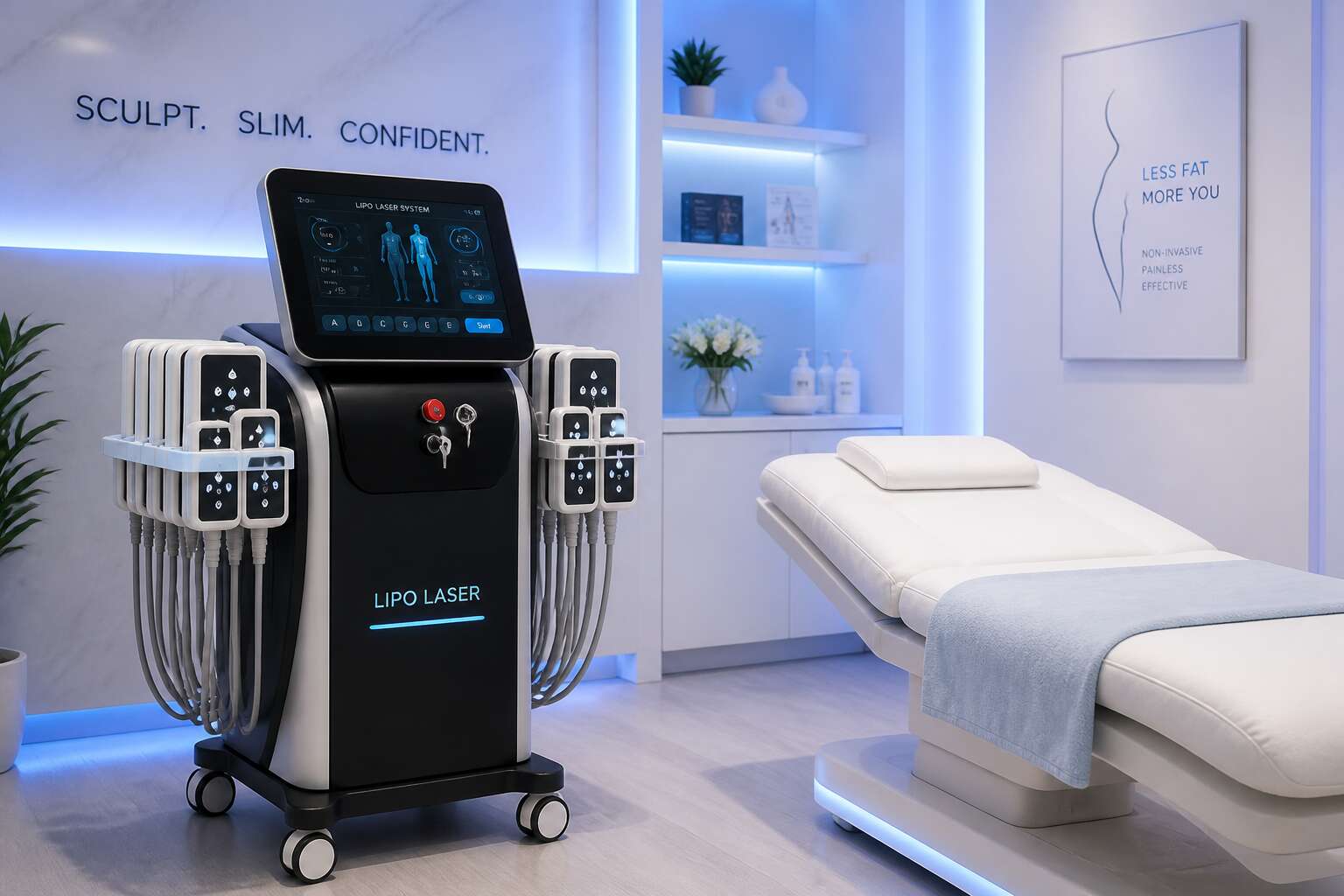
Understanding Lipo Laser Technology
How Lipo Laser Body Contouring Works
The allure of a non invasive silhouette is undeniable, but the science warrants a closer inspection. Lipo laser technology operates on a photothermal principle, targeting the subdermal fat layer with specific wavelengths of light. This energy causes the adipocyte cell membrane to become temporarily porous, allowing the intracellular lipids to leach out into the interstitial space. It is not the destruction of the fat cell that defines this method, but rather the controlled deflation of it, a distinction that offers a more gradual cosmetic result.
Clinics across South Africa are increasingly drawn to this modality due to its procedural efficiency. The biological processing of the liberated fatty acids relies on the body’s natural hepatic and lymphatic clearance mechanisms. Once the contents have been released, the collagen matrix in the treated area often shows a degree of thermal retraction, which can contribute to skin tightening. For the aesthetic practitioner, the appeal of the lipo laser machine for sale lies in this dual action of fat reduction and skin firmness, a combination rarely seen in traditional suction based devices.
The workflow requires a specific physiological response. Consider the sequence of events that must transpire for optimal results:
1. The delivery of low level laser energy to the adipose tissue.
2. The temporary alteration of fat cell membrane permeability.
3. The passive release of triglycerides into the intercellular fluid.
4. The subsequent metabolism and excretion of these free fatty acids.
If any of these stages are delayed, the treatment becomes less effective. This is why patient candidacy, specifically regarding liver function and hydration, is a critical variable. That technical precision is precisely what makes modern investment in a lipo laser machine for sale a decision based on biological validation, not just consumer demand. The procedure requires no anaesthesia, yet it compels the body to perform a complex metabolic task akin to a low grade systemic workout, all while the client remains recumbent and relaxed.
Types of Lipo Laser Machines and Applicators
One would be forgiven for assuming all laser lipolysis devices share a single heartbeat. The truth is that the market for a lipo laser machine for sale holds distinct families of technology. Some systems deploy a continuous wave emission, while others utilise a pulsed output to prevent tissue overheating. The diode array configuration, whether 650nm or 1060nm in wavelength, fundamentally dictates the depth of thermal influence. Understanding the diode’s power rating is more critical than the casing; a flimsy unit with low milliwatt output will simply not provoke the necessary response from the adipocyte.
The applicator is your primary interface with the client, and its geometry matters. Traditional paddle style boards are still common, but recent designs favour flexible pads that wrap around stubborn contours like the love handle region. A stationary applicator relies on the practitioner’s manual placement. A dynamic one, however, employs a subtle compression mechanism to facilitate lymphatic drainage during the session itself. When you evaluate a lipo laser machine for sale, you are essentially auditing the efficiency of these transducers.
Here are three material considerations when reviewing the applicator build:
– The internal cooling gel layer must remain pliable after months of repeated use.
– The optical lenses require a clean, scratch resistant coating to maintain energy delivery.
– The connecting cables should be shielded to prevent micro interruptions in energy flow.
These factors determine whether the device delivers consistent energy across a full session. A machine that drifts in power output creates uneven results regardless of the patient’s compliance with the treatment plan. For the discerning South African clinic, the choice of laser machinery often comes down to the ergonomics of the applicator and the verifiable output parameters, rather than flashy digital touchscreens.
Key Safety Standards and Certifications
A certification sticker is not a decorative flourish. It is the only honest promise a manufacturer makes. When I evaluate a lipo laser machine for sale for a South African clinic, I look past the brochure and straight at the compliance documentation. The device must carry CE marking under the European medical device directive, and ideally, FDA 510(k) clearance. For local practice, SAHPRA registration is non negotiable. These marks verify that laser emission is contained, thermal output is monitored, and electrical components meet rigorous standards.
Safety protocols also govern the operator’s behaviour:
- Wavelength specific eyewear must be worn during every session.
- The treatment head must be inspected for lens cracks before each use.
- The interlock system must disable the laser if the applicator lifts off the skin.
A lipo laser machine for sale with the right paperwork is worth the premium. The reputable suppliers in the country will happily present their certification files. Ask to see them! Your clients’ skin is not the place for creative interpretation of safety standards.
Lipo Laser vs. Traditional Liposuction Procedures
The promise of a sculpted silhouette has never been more accessible, yet the path to achieving it has two distinct forks. Traditional liposuction, a procedure involving cannulas and suction, remains a formidable option for significant fat removal. However, the landscape of aesthetic medicine has shifted. The nuanced, non invasive alternative offered by a modern lipo laser machine for sale presents a fundamentally different patient experience, one that prioritises minimal disruption to daily life.
Traditional methods physically disrupt adipose tissue, which often translates to considerable bruising and a lengthy recovery period. Patients face compression garments and days of downtime. In contrast, laser technology employs specific wavelengths to disrupt the fat cell membrane without collateral damage to surrounding tissue. This distinction is not merely a matter of comfort; it changes the entire physiological response. The body’s lymphatic system naturally processes the emulsified fat, which allows for a more gradual and organic contouring effect.
For a clinic in Johannesburg or Cape Town, the choice of equipment dictates the treatment philosophy. A lipo laser machine for sale offers a solution for the client who cannot afford a week of recovery. It is a system that fits into a lunch break, not a hospital stay. The absence of anaesthesia and incisions removes the anxiety many patients harbour about surgical intervention.
What differentiates the two experiences on the floor:
– Invasiveness: Traditional lipo involves surgical entry points; laser is transcutaneous.
– Recovery: Surgical procedures require cessation of activity; laser sessions permit immediate return to work.
– Targeting: Cannulas remove whole fat cells; lasers induce apoptosis, or cellular death, for natural elimination.
The capital expenditure for this technology is justified by the sheer volume of consultations it attracts. When I speak with practice managers, the conversation often hinges on the efficiency of client turnover. Traditional lipo ties up an operating theatre and a surgeon. Laser therapy utilises a single technician and a treatment room. The operational simplicity allows a practice to treat multiple clients in the time it would take to prepare a single surgical suite. This economic reality is shifting how South African clinics allocate their resources, moving towards the versatility of a non invasive device that delivers observable results without the surgical risk profile.
Features to Prioritize When Buying Lipo Laser Equipment
Wavelength Options and Treatment Depth
Wavelength selection determines how effectively energy penetrates adipose tissue. Most systems use 635nm or 810nm diodes, but the difference matters. Lower wavelengths target superficial fat, while higher wavelengths reach deeper layers. A clinic in Johannesburg treating subcutaneous fat needs different specifications than one addressing visceral deposits.
Treatment depth also depends on probe configuration. Flat applicators cover broad areas, whereas pointed handpieces deliver focused energy. When evaluating a lipo laser machine for sale, ask for penetration charts. They reveal whether the device suits your typical client body type. I always tell buyers to check these details first! Consider the following before committing to a purchase:
- Verify adjustable power output across multiple wavelengths
- Check probe depth ratings against your target treatment areas
- Consider dual-wavelength systems for versatile patient profiles
Depth and wavelength work together. A device that offers both delivers consistent results across diverse body types.
Power Output and Adjustable Settings
Power output determines how much energy a device delivers per second. Adjustable settings determine whether that energy matches the client in front of you. Fixed settings force the practitioner to adapt the patient to the machine. That is backwards.
A quality lipo laser machine for sale should offer continuous power adjustment instead of preset steps. Skin type, fat density, and treatment area all change the required energy. A gluteal treatment in Durban may need different parameters than a chin contour in Cape Town.
These features distinguish professional equipment from consumer devices:
- Power ranges spanning at least 20 watts across adjustable channels
- Independent control per applicator pad
- Real-time power readout on the console
- Safety cutoffs when output exceeds set limits
If a machine cannot fine-tune output per zone, it cannot adapt to your client base. The controls must respond instantly and hold their calibration across repeated sessions. That reliability directly affects your treatment consistency.
Portability and Space Requirements
Some equipment arrives with a footprint larger than the consulting room it is meant for. When shopping for a lipo laser machine for sale, measure your space before you measure the specs. A console that promises 40 watts but cannot fit through the door is an expensive paperweight.
Portability matters as much as power. Many machines claim to be mobile, yet their cart wheels wobble under the generator’s weight. Look for locking castors, side handles, and a footprint under half a square metre.
If you rent space or travel between branches, weight becomes your second language. Carrying 40 kilograms up a flight of stairs in Umhlanga tests your commitment to the brand. Check the manual for dimensions, not marketing images.
A practical checklist:
- Weight under 30 kilograms for single operator moves
- Wheelbase wide enough to cross thresholds without tipping
- Cable storage that keeps leads off the floor
Measure the treatment room, doorways, and lift access before signing.
Evaluating Cost and Financing Options
Pricing Ranges for New and Refurbished Units
Many clinic owners in South Africa face a common dilemma: how to acquire capable equipment without draining reserves. A refurbished unit can cost 40% less than a brand new system, yet the performance gap often narrows to a few watts. When we evaluate a lipo laser machine for sale, the sticker price never tells the full story.
New devices generally range from R45,000 to R250,000, while refurbished units sit between R18,000 and R80,000. The variance hinges on diode age, applicator count, and console generation.
Financing structures available to clinics include:
- Equipment rental agreements with a buyout clause
- Bank asset finance with residual payments
- Supplier instalment plans tied to treatment packages
These options let practices preserve working capital while upgrading. A certified reseller’s refurbished lipo laser machine for sale often includes a six month warranty, which shifts the risk balance.
Hidden Costs: Accessories, Maintenance, and Warranty
The purchase price of a lipo laser machine for sale often hides the true cost of ownership. Accessories like applicator pads, protective goggles, and cooling sleeves wear out faster than the console itself. A clinic in Johannesburg might spend R8,000 annually on replacement applicators alone, depending on treatment volume.
Maintenance contracts vary widely. Some suppliers include calibration checks in the warranty period; others charge per service visit. Recurring expenses include:
- Diode calibration, every 12 to 18 months
- Console software updates and hardware diagnostics
- Shipping costs for bench repairs
Warranty terms for a refurbished lipo laser machine for sale typically cover the diode array but exclude applicator cables. Those boundaries matter because a single replacement cable can cost R3,500. The final price depends on what breaks, when it breaks, and who pays for the courier.
Financing, Leasing, and Rental Programs
R5,000 a month for a lease might sound like a bargain until you read the fine print on the kilowatt-hour consumption. The financial calculus of a lipo laser machine for sale stretches far beyond the initial quote. Many buyers discover that the real expense is the opportunity cost of locking up capital in a device that could become obsolete in three years.
Financing in South Africa typically follows three routes. A standard bank loan spreads the cost over 36 to 60 months, but the interest rates on medical equipment hover around prime plus 2%. Equipment rental programs offer an escape hatch. A clinic in Durban tested a rental model that let them return the unit after a slow season, which preserved their cash flow for marketing.
– Rent-to-own agreements often include consumables, which provides a predictable monthly spend.
– Operating leases shift the maintenance burden to the supplier, converting repair fees into a fixed cost.
– Short-term rental programs for a lipo laser machine for sale are ideal for testing patient demand before committing.
The clever money focuses on the total cost of use, not the sticker price. A lease might cost R6,000 monthly, but it covers the annual diode calibration and software updates that would otherwise arrive as surprise invoices. The tangible benefit is that you can trade up to a newer model when the lease expires, instead of nursing an ageing console through its twilight years. Your accountant will appreciate the tax deduction on the lease payments, and your cash reserve stays intact for the unexpected courier bill when something finally breaks.
Calculating Return on Investment for Your Practice
The real question for any practice is not the monthly premium but the payback period. A lipo laser machine for sale only justifies its cost when it reaches a certain utilisation rate. If the device sits idle for half the week, no financing structure can save it. Some owners calculate ROI per treatment session, factoring in consumables, technician time, and the room’s electricity draw. Others prefer a simpler benchmark: how many sessions per month cover the instalment.
Consider the variables that affect your numbers:
– Average treatment price in your area
– Session duration and staff capacity
– Seasonal demand fluctuations
– Aftercare product sales
In South Africa, the high-end market in Sandton or Umhlanga supports premium pricing, but a clinic in a smaller town might need higher volume. The clever approach is to project three scenarios, conservative, realistic, and optimistic, before signing anything.
Comparing Cost Per Treatment vs. Revenue Potential
Some clinics acquire a lipo laser machine for sale and measure its worth in the daily arithmetic of treatment bays. The calculation is stark. Your cost per treatment includes the electrical current, the technician’s hourly wage, and the slow depreciation of the diodes. Your revenue per treatment, however, depends entirely on the confidence you project when the patient lies down on the table. If your price point is R850 per session and your overhead per session is R200, the margin appears healthy until you count the empty hours.
Here is the ledger you should examine before signing any purchase order:
– Consumables and gel per patient
– Staff time for setup and cleanup
– Service plan amortisation over forty-eight months
– Marketing cost to fill each vacancy
The equipment becomes profitable when your booking calendar reflects a consistent rhythm. A machine that generates R3,400 on a Saturday but sits idle on Tuesday and Thursday creates a false economy. Consider how many sessions your market can sustain. In Cape Town’s southern suburbs, the cosmetic clinics compete on experience and ambience. In Johannesburg’s northern crescents, the competition might hinge on speed and package deals. The same lipo laser machine for sale can represent a luxury offering or a high volume service, the distinction lies in your pricing architecture and your willingness to promote aggressively. The revenue potential is real, but only when you treat the machine as a recurring asset rather than a one-time acquisition.
Choosing a Reliable Supplier and Manufacturer
Questions to Ask Before You Request a Quote
A single failed diode can close your treatment room for days. Before you request a quote, ask about after-sales support. A trustworthy supplier in South Africa should have local technicians, not just a helpline.
I always tell buyers to run this short checklist when vetting vendors:
- Do they stock spare parts inside the country?
- Will they train your staff on the machine?
- Can they provide client references in your region?
A stable manufacturer with its own production line reduces risk. Ask how long they have operated and how they recall faulty devices. That conversation reveals more than any brochure. When you see a lipo laser machine for sale, remember you are buying the company behind it as much as the hardware!
Warranty Coverage and After-Sales Support
A supplier once told me, “We don’t sell machines, we sell uptime.” That has stayed with me. In South Africa, a lipo laser machine for sale means nothing if it sits dark in your treatment room.
Warranty coverage is where good suppliers reveal themselves. The honest ones stock spare parts locally. They have technicians who can reach your practice in a day, not a week. The warranty document matters, but the people behind it matter more.
Comparing options takes time. Existing clients share their repair stories freely. The differences between suppliers become clear when you hear about response times and whether a technician answered or a call centre did. Another lipo laser machine for sale listing might look identical, but the after-sales support behind it is rarely the same.
After-sales support separates a sound investment from a costly mistake. A reliable supplier trains your staff and honours every page of the warranty. The machine pays for itself. A neglected one sits unused.
Customer Reviews, Case Studies, and Clinical Evidence
Three out of five aesthetic practices admit to choosing equipment from a brochure. That statistic should worry you. A lipo laser machine for sale only proves its worth through manufacturer customer reviews and clinical case studies. Reliable suppliers share treatment outcomes, patient satisfaction scores, and raw before-and-after data without hesitation. They also connect you with existing clients who speak candidly about their results.
Demand verifiable evidence. Published studies matter, especially for wavelength efficacy across diverse skin types common in South Africa. Ask for:
- Case studies with measurable fat reduction percentages
- Clinical photographs taken under consistent lighting
- References from practices with similar client demographics
The supplier who embraces scrutiny is the one worth your money. A machine with vague testimonials and no supporting literature is suspect. Walk away.
Shipping, Installation, and Staff Training
A supplier’s reputation lives or dies on logistics, not just sales pitches. When you search for a lipo laser machine for sale, the conversation must shift to delivery timelines and the manufacturer’s local footprint. South African clinics face unique challenges with customs clearance and power supply variations. A reliable partner knows these hurdles and plans for them.
Your team cannot operate a machine they don’t understand. The best suppliers bundle installation and staff training into the purchase price. Look for bespoke onboarding that covers treatment protocols and emergency troubleshooting.
– Verify the shipping terms, including insurance against damage.
– Confirm who pays for import duties and VAT.
– Ask if a technician visits your practice for the initial setup.
– Determine if training is remote or in person.
I have seen practices stall for weeks waiting for basic calibration. The manufacturer’s proximity to your province matters. A supplier with regional support in Johannesburg or Cape Town gets you back to treating patients faster than one shipping parts from abroad. Prioritise vendors who treat installation as the beginning of the relationship, not the end.
Verifying Authenticity and Avoiding Counterfeit Units
The market for a lipo laser machine for sale has attracted opportunistic sellers. Counterfeit devices circulate through online marketplaces promising clinical outcomes they cannot deliver. A genuine unit retains calibration and safety certifications. A fake one places your patients at risk.
Verify the manufacturer’s registration. Request the device serial number and cross check it directly with the producer. Ask for certificates of authenticity. Confirm the supplier is an authorised distributor.
- Confirm the serial number against the manufacturer’s registry.
- Ask for a letter of authorisation from the factory.
- Verify warranty activation with the producer, not the vendor.
I have seen clinics chase deep discounts, only to receive units with mismatched diodes. The repair bill exceeds any savings.
Post-Purchase Steps and Business Integration
Preparing Your Space for Installation
The delivery date is confirmed. The invoice is settled. Preparation starts before the machine arrives.
Start with the electrical supply. Most units draw between 5 and 10 amps, so a dedicated circuit prevents tripped breakers. Keep the floor level and stable. Casters roll easily over tile, but carpet creates instability.
Before installation day, check a few practical details:
- Ensure the room has adequate ventilation, since cooling fans generate heat
- Leave at least a metre of clearance around the unit
- Confirm the door width accommodates the device’s dimensions
Integrating the device into daily workflow matters as much as physical setup. Ask for the supplier’s pre-installation checklist two weeks before arrival! Check whether the machine’s software exports treatment records to your booking system. When you buy a lipo laser machine for sale from a professional distributor, ask if their deployment team handles software configuration alongside hardware installation. A lipo laser machine for sale through private channels rarely includes that support.
Creating Treatment Protocols and Pricing Packages
The new unit has arrived. The crates are open, and the machine hums in its designated corner. Yet this quiet moment often reveals a truth: hardware alone does not build a practice. The post purchase phase determines whether this investment multiplies or merely sits idle.
Treatment protocols demand deliberate design. Copying a standard session length from a brochure ignores your actual clientele. A clinic in Sandton treats different body types than a practice in Durban. Calculate operational costs first. Set prices that cover consumables, staff time, and machine depreciation. Package deals work well here. A course of six sessions at a modest discount encourages commitment. Single session rates remain for the curious first timer.
Pricing packages should mirror your specific setup. If your lipo laser machine for sale includes multiple applicator sizes, market that advantage. A buyer with a mono wavelength unit cannot offer the same contouring scope. Build a tiered menu: basic abdomen treatment, full body contouring, and a maintenance package. Each tier carries a clear outcome, and each price point justifies its promise.
The software integration deserves attention now. If your booking system accepts treatment records from the machine, follow up appointments become seamless. Automated reminders for the next session reduce no shows. Ask your distributor during installation whether they configured this link. A lipo laser machine for sale through private channels often lacks this administrative bridge, leaving you with manual data entry and missed opportunities.
Staff training completes the integration loop. Your therapist must know more than which button starts the laser. They should understand contraindications, skin response, and how to adjust settings for different adipose layers. Build a protocol manual specific to your machine model. Review it quarterly. This discipline protects your client experience and your clinical reputation.
The first month after installation is your quietest period. Use it wisely. Photograph every treatment with consistent lighting. Document before and after measurements using a fixed method. These records become the social proof that sells future packages. The machine works during sessions, but your business grows between them.
Marketing Your Lipo Laser Services Locally
Your machine is installed, your protocols are set, and now the quiet hum needs an audience. Marketing your services locally requires more than a social media post. The clinic that thrives is visible in its own neighbourhood.
Start with the people who already trust you. Existing clients from other treatments know your space and your standards. Mention the new lipo laser machine for sale at the reception desk, on your statement slip, and in your follow up WhatsApp messages. A single referral from a satisfied client pulls more than any paid advertisement.
Then widen the circle:
- Approach nearby gyms and dieticians with a commission based referral arrangement.
- Exhibit before and after albums at local markets and community events.
- Update your Google Business profile with the new treatment list and photographs.
Each of those actions costs little beyond your time. Yet each one places your clinic in front of people who already seek body shaping. Local searches for contouring often end at whatever appears first. Make certain that first result is you!
Ongoing Maintenance and Compliance
The transaction ends when your lipo laser machine for sale arrives. Ownership begins when you switch it on. Many practices treat the device as a static purchase. That mindset creates avoidable costs.
Routine care keeps the machine accurate. We see units fail because owners skip the boring steps. Set a recurring calendar reminder for output checks. Log every filter change and service call in a book that lives beside the unit. A drifting power reading means a failing diode. Catch it early and you save thousands in repairs!
Compliance in South Africa has two layers. The technical layer meets SANS electrical standards. The administrative layer proves staff competency and maintenance schedules to the HPCSA. Keep both current.
Weekly hygiene checks. Monthly calibration reviews. Quarterly documentation audits. Store records online and in print. A disciplined clinic runs a machine that always performs. That reputation keeps your lipo laser machine for sale working at full capacity for years.

0 Comments